By Sonja Botha – Certified Financial Planner
Updated 8 September 2026
In a world shaped by artificial intelligence, shifting interest rate expectations, geopolitical uncertainty and record levels of debt, investors face no shortage of opinions about what comes next. Markets move daily on earnings reports, inflation data and central bank announcements. But beneath the noise lie a handful of fundamental questions that ultimately determine long-term investment outcomes.
While financial headlines change every day, the most successful investors remain focused on identifying the major forces that will shape wealth creation over the coming years.
The following six questions are currently at the heart of that debate, and they highlight some of the most important investment risks and opportunities investors need to consider.

1. Are Asset Prices Too Expensive?
The Question
Investors are asking whether today’s market valuations, particularly in technology and AI-related companies, accurately reflect future growth prospects or whether expectations have become overly optimistic.
“Am I paying too much for future growth?”
This is particularly relevant for:
- AI-related stocks
- Large technology companies
- Private equity
- Real estate in some markets
The fear is that expectations become so optimistic that even excellent companies disappoint investors.
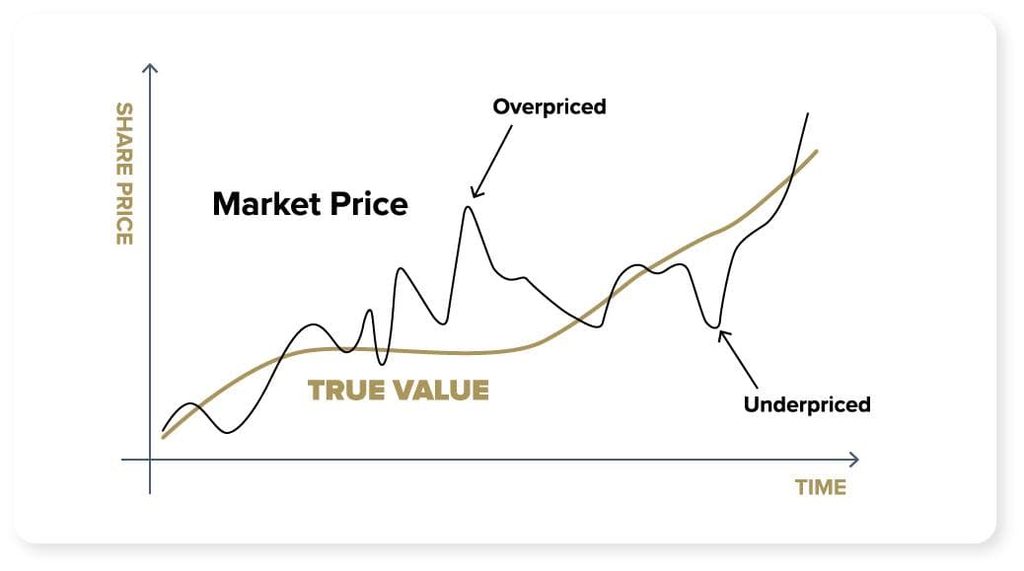
The Key Question: Are Earnings Growing Fast Enough to Justify Valuations?
Parts of the market are undoubtedly expensive, but not all of it.
The AI leaders of today are not merely stories built on hope. Many are generating substantial revenues and profits, with Microsoft’s recent results providing further evidence that AI-related investment is translating into commercial success. Azure’s cloud business recently surpassed $100 billion in annual revenue, reinforcing investor confidence in AI-driven growth.
However, high valuations leave little room for disappointment. When investors price a company for extraordinary growth, even a very successful business can see its share price decline if results fail to exceed expectations. Our concern is not that markets are in a speculative bubble. Rather, investors should recognise that future returns may depend more on earnings growth than valuation expansion. The higher the starting price, the less forgiving the market becomes when growth slows.
Key takeaway: Valuations are elevated in certain sectors, but the greater risk is not overvaluation itself. It is the possibility that future growth fails to justify today’s expectations.
2. What Will Happen to Interest Rates?
The Question
Will central banks return to the low-interest-rate environment investors enjoyed during the 2010s, or has the world permanently shifted to a higher-rate regime?
Interest rates affect virtually every asset class.
Investors are asking:
- Will central banks cut rates?
- Will inflation force them to keep rates higher?
- Are bond yields attractive enough to compete with stocks?
A change of just 1% in expected rates can materially change the value of stocks, bonds, property and currencies.

The Key Question: Are We Entering a Lower-Rate World or a Structurally Higher-Rate World?
We believe interest rates are likely to settle at levels higher than those experienced during the decade following the Global Financial Crisis.
Several structural factors support this view:
- Rising government debt
- Increased defence spending
- Major investment in energy infrastructure
- Labour market pressures
- Persistent inflation risks
Recent central bank decisions illustrate just how delicate the balancing act has become. Policymakers are attempting to support growth while ensuring inflation remains under control. Markets interpreted recent Federal Reserve communication as relatively dovish, although uncertainty remains regarding the next policy move.
While rates may decline from current levels over time, we do not expect a return to the era of exceptionally cheap money unless economic conditions deteriorate significantly.
Key takeaway: Investors should prepare for a world where interest rates are lower than recent peaks but higher than the ultra-low levels many became accustomed to.
3. Is Inflation Truly Under Control?
The Question
Has inflation been defeated, or is it simply dormant and waiting for the next catalyst?
Inflation is one of the most significant investment risks because it can quietly erode investment returns.
If inflation remains elevated:
- Bond holders lose purchasing power.
- Central banks may keep rates high.
- Consumer spending can weaken.
Investors are also watching:
- Energy costs
- Wage growth
- Government deficits
- Supply chain disruptions

The Key Question: Is Inflation Dead, or Merely Sleeping?
Inflation appears largely under control today, but we do not believe it has disappeared as a long-term risk.
The previous decade conditioned investors to believe inflation would remain subdued indefinitely. Recent events have proven otherwise.
Potential inflationary pressures remain:
- Energy market disruptions
- Supply chain shocks
- Rising wages
- Fiscal deficits
- Geopolitical tensions
Recent developments in the Middle East and their impact on oil markets serve as a reminder that inflation can return quickly through higher energy prices.
The expectation is not for persistently high inflation, but rather for greater inflation volatility than investors experienced prior to the pandemic.
Key takeaway: Inflation is unlikely to vanish completely and may remain one of the defining economic risks of the next decade.
4. Is AI Creating a Genuine Productivity Revolution?
The Question
Is artificial intelligence a transformative economic force or simply the latest market excitement?
This is arguably the biggest investment debate today.
The Bullish View
AI could increase productivity as dramatically as the internet did.
The Bearish View
Investors are overestimating short-term profits and underestimating the costs.
Investors want to know:
- Who will actually make money?
- Microsoft?
- Nvidia?
- Software companies?
- Businesses using AI?
Or will AI become a commodity where profits get competed away?
The Key Question: Who Captures the Value — the Builders or the Users?
We believe AI represents a genuine productivity revolution.
The evidence is becoming increasingly difficult to ignore. Companies are integrating AI into products, workflows, customer service, software development and enterprise operations. Microsoft’s recent earnings have strengthened the case that large-scale AI investments are beginning to produce measurable financial returns.
However, history teaches an important lesson.
Many transformative technologies created enormous societal value while generating disappointing returns for some investors. Railroads changed transportation. The internet transformed communication and commerce. Yet many companies associated with those revolutions failed to reward shareholders adequately.
The critical question is no longer whether AI will create value.
The critical question is:
Who will capture that value?
Will it be technology providers, software companies, businesses deploying AI, workers, consumers, or some combination of them all?
Key takeaway: AI is real and likely transformative, but not every company associated with AI will emerge as a winner.
5. Can Corporate Earnings Continue Growing?
The Question
Can businesses continue delivering the profit growth that current market valuations assume?
At the end of the day, stocks are claims on future profits.
Investors are asking:
- Will companies continue growing earnings?
- Are margins sustainable?
- Can consumers keep spending?
Even strong markets eventually depend on earnings growth. For investors, this makes corporate earnings one of the key investment risks to monitor when assessing whether current valuations are sustainable.

The Key Question: Are Earnings Expectations Realistic?
Yes, but earnings growth is likely to become increasingly uneven.
Large, successful companies possess advantages that are difficult to replicate:
- Global reach
- Strong brands
- Access to capital
- Network effects
- Technological leadership
These strengths should support continued earnings expansion.
However, growth becomes progressively harder as companies increase in size. Doubling profits from a small base is challenging. Doubling profits from an already enormous base is exponentially more difficult. Investors should therefore expect stronger divergence between companies that possess pricing power and competitive advantages and those that do not.
The businesses most likely to thrive in the years ahead are likely to be those that successfully combine innovation, efficiency and AI adoption.
Key takeaway: Earnings growth remains achievable, but investors should expect greater dispersion between winners and losers.
6. What Investment Risks Could Investors Be Missing?
The Question
What is the risk that markets are currently underestimating?
Professional investors spend enormous amounts of time asking:
“What is the risk nobody is talking about?”
Examples include:
- Geopolitical conflict
- Debt crises
- Banking problems
- Commodity shocks
- Regulatory changes
- Technological disruption
Many investment disasters occur because investors focus on known risks while ignoring emerging ones.

The Key Question: What Would Surprise the Market Most?
The answer that concerns us most is sovereign debt.
Much attention is being paid to AI, rate decisions and corporate earnings. Yet government debt levels continue to grow across many developed economies.
At some point, investors may begin demanding higher compensation for lending to governments. If that occurs, the consequences could affect nearly every asset class simultaneously:
- Higher bond yields
- Lower equity valuations
- Increased borrowing costs
- Currency volatility
- Slower economic growth
While this is not necessarily an immediate threat, it is one of the few risks capable of influencing stocks, bonds, property and currencies at the same time.
A second underappreciated risk is geopolitical fragmentation. Recent tensions affecting energy markets provide a clear example of how geopolitical developments can rapidly influence inflation, growth and investor sentiment.
Key takeaway: Government debt and geopolitical fragmentation may become defining themes for investors over the next decade.

Final Thoughts: Understanding Today’s Investment Risks
The fascinating reality is that the biggest investment risks and opportunities often emerge from structural shifts rather than daily headlines. For that reason, the question investors may be asking in 2030 is unlikely to be whether AI worked.
Instead, it may be: Who ultimately captured the extraordinary economic value that AI created?
For investors, understanding these structural forces — from market valuations and interest rates to inflation, artificial intelligence, corporate earnings and sovereign debt — may be more important than reacting to the financial headlines of the day.